

With increasing deployment of solar PV systems, potential glare from the glass surfaces of the PV modules has raised some concerns. Although PV modules are designed to reflect as little sunlight as possible, glare can still occur in some situations. Hazards caused by improperly sited PV modules may include distraction and/or temporary disability (flash blindness). These potential hazards are even more crucial at locations where glare might affect operational safety, such as at airports. To address these challenges, SERIS has developed an in-house capability to analyse the effects of glare at several observation points using commercially available glare assessment tools. This capability has been developed from a knowledge base that has its origin in SERIS’ involvement in government-initiated studies on glare from particular PV installations in Singapore. SERIS has also previously advised both the Building & Construction Authority (BCA) and the Urban Redevelopment Authority (URA) regarding actual glare cases arising from PV installations. In addition, close engagement with the Civil Aviation Authority of Singapore (CAAS) was established concerning solar PV projects at or near Changi and Seletar airports.
SERIS’ track record in glint and glare consultations for PV installations:
1. Publications:
i. Diminishing the glare that obscures, September 2015, PV Tech
ii. Circular Nr. URA/PB/2017/01-DCG, 24 January 2017, Urban Redevelopment Authority, Singapore
2. Project references for glint and glare analysis involving commercially available glare assessment tools:
i. Singapore – 149 locations
ii. Malaysia – 29 locations
iii. Cambodia – 1 location
iv. Kingdom of Saudi Arabia – 1 location
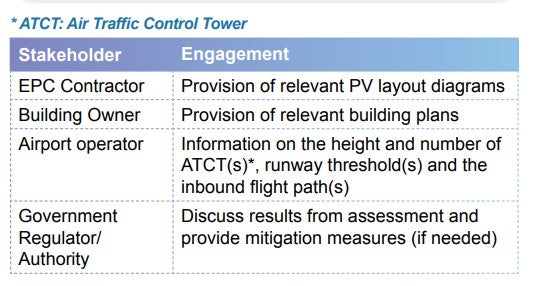
With experience gained from glare-related projects under the SolarNova programme, coupled with extensive experience in PV systems, SERIS is able to provide glare analysis and recommend mitigation measures for developers concerned about potentially introducing glare through their PV system installations. This is conducted in close cooperation with various stakeholders (see Table 1), using the framework outlined in Fig. 1.
Table 1: Interactions with stakeholders in a typical glint and glare analysis (Example: Proposed installation near an airport)
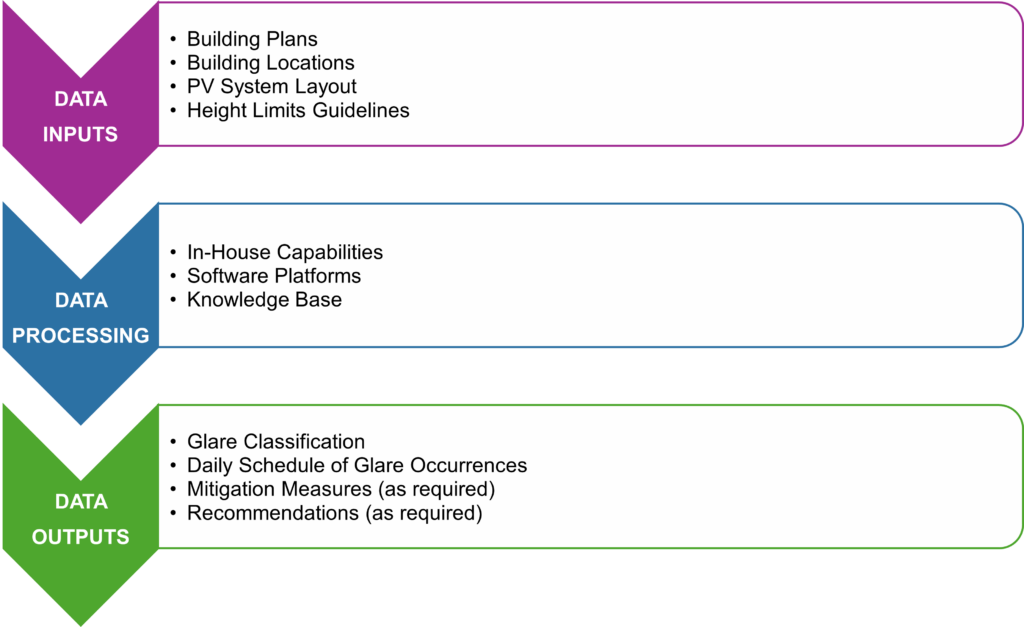
can be designed to suit the needs of individual clients
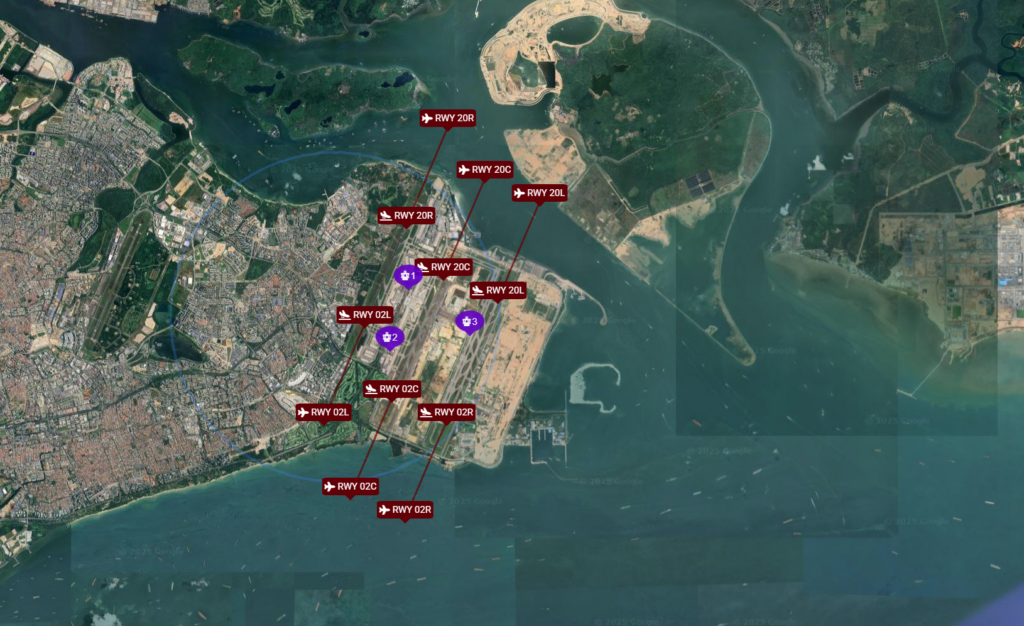
for glare analysis for a PV installation within Changi Airport, Singapore