
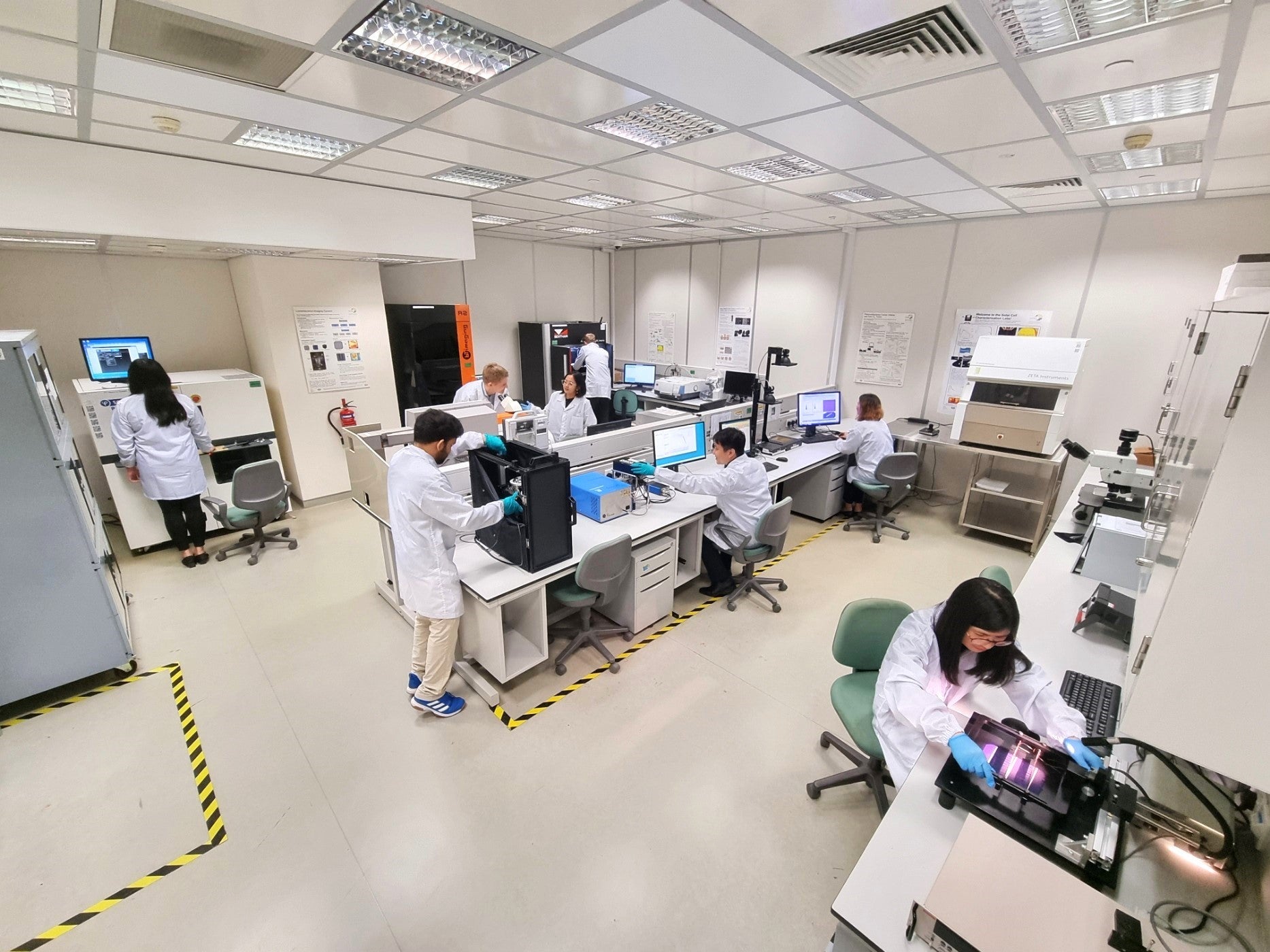
The PV Devices Characterisation Laboratories at SERIS are equipped with a comprehensive suite of measurement tools designed to examine both material and device properties. The characterisation of optical & passivation layers, bulk materials, and solar cell metallisation enhances the understanding of their impact on solar cell efficiency. This complements device-level measurements of perovskite-based and silicon-based solar cells, tandem cells, and single-cell mini-modules. By combining meticulous characterisation with specialised simulation techniques, advanced solar cell analysis can quantify performance-limiting factors and predict potential efficiency improvements.
Materials Characterisation Laboratory
This laboratory houses both general-purpose materials characterisation tools, such as 3D optical microscopy, FTIR and Raman spectroscopy, as well as silicon-based materials characterisation techniques, including a luminescence imaging tool, an effective minority carrier lifetime tester, and a TLM resistance measurement tool. It also contains a small beam spectral response measurement system to study the optoelectronic properties of solar cells.
Electron Microscopy Laboratory
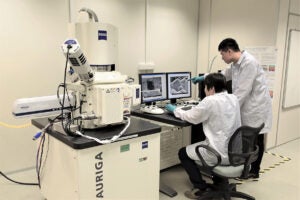
The centrepiece equipment of this laboratory is the FE-SEM (field-emission scanning electron microscope), an electron microscope used to obtain high-magnification images of submicron structures of electrically conductive samples. Our SEM has additional accessory ports for elemental composition studies using an EDX (energy-dispersive X-ray) detector, crystallographic grain studies using an EBSD (electron backscatter diffraction) detector, and electrical semiconductor properties using an EBIC (electron-beam induced current) setup. The lab also houses optical characterisation tools, such as a UVVIS-NIR spectrophotometer which provides a direct method of measuring the total transmittance and reflectance of a sample. Additionally, the lab contains a spectroscopic ellipsometer, an advanced method for determining the optical properties (thickness, refractive index and extinction coefficient) of thin-film samples.
Solar Cell Measurement Laboratory
This laboratory focuses on measuring solar cell efficiencies, one of the most important parameters of solar cell devices. The lab is divided into two sections. The dark room houses a xenon lamp-based steady-state solar simulator, a large-area spectral response measurement tool, and an area measurement tool. These are used for high-precision I-V and spectral responsivity measurements to determine the efficiency of solar cells provided by SERIS researchers or external customers. The other section of the lab contains LED-based I-V testers, where SERIS researchers can quickly perform their daily I-V measurements on perovskite, silicon or tandem solar cells, and a light soaking system for long-term cell degradation studies.
Advanced Characterisation Laboratory
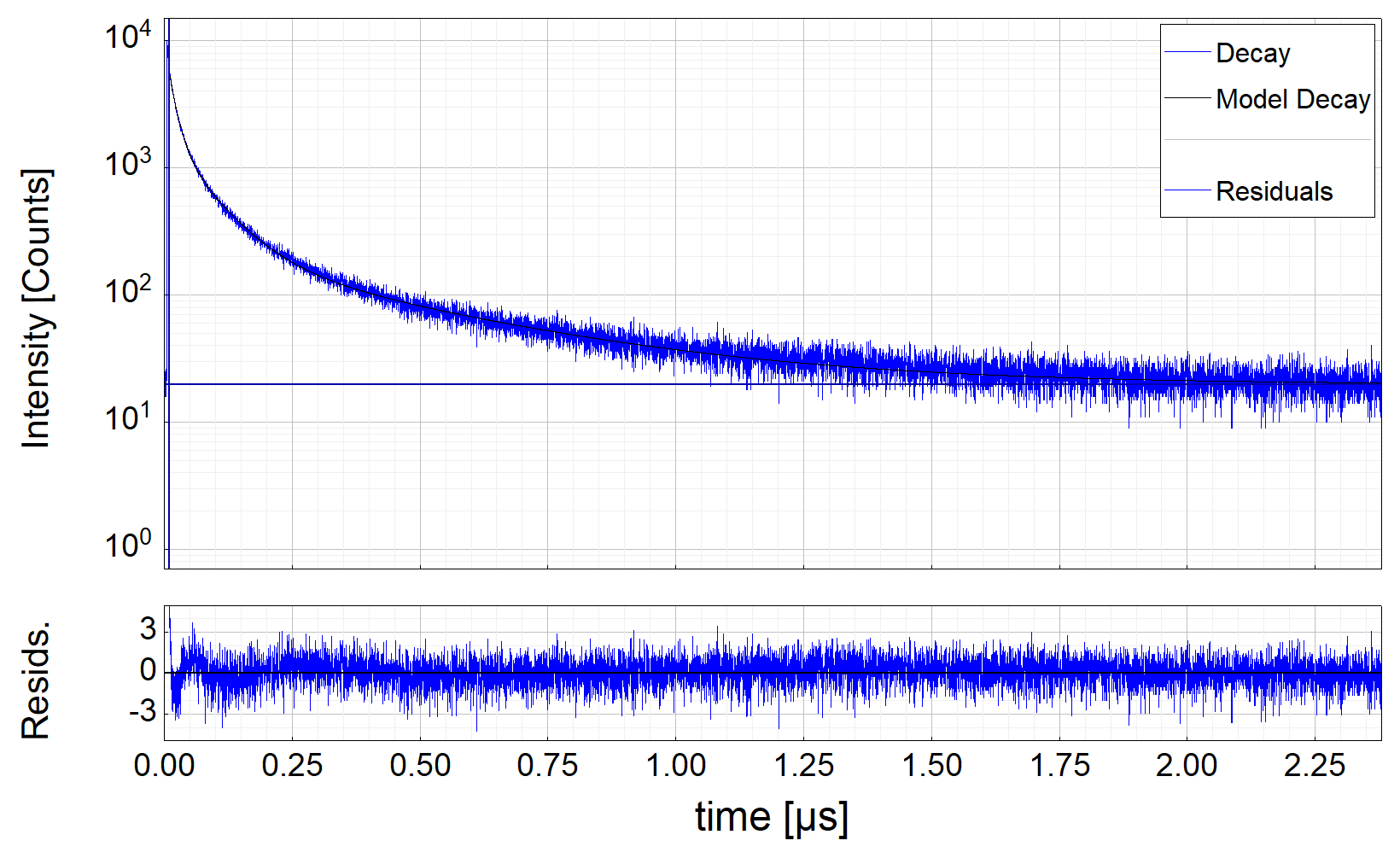
This laboratory houses cutting-edge commercial characterisation tools as well as tools currently being developed by SERIS. It contains a time-resolved photoluminescence tool, which is used to measure the luminescence spectrum of perovskite materials and their effective carrier lifetime, ranging from picoseconds to microseconds. The lab also has a LED-based modulated PL setup and a high-resolution spectral response system, modified in-house to study the optoelectronic properties of perovskite samples.